
Kathmandu's Co-working Boom: What It Means for Freelancers
Kathmandu Co-working Spaces 2026: A Freelancer's Guide
Kathmandu's Co-working Boom: What It Means for Freelancers
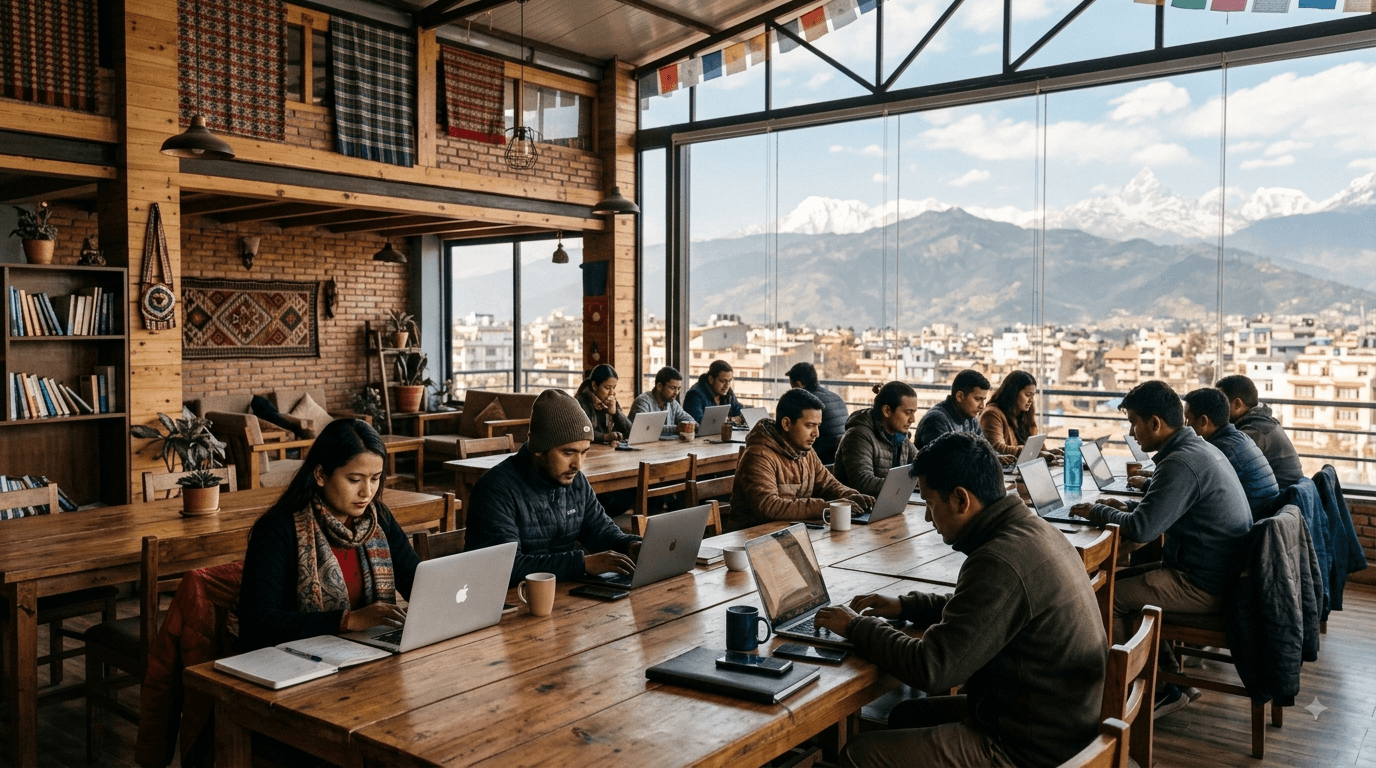
Five years ago, "coworking space" wasn't really part of Kathmandu's vocabulary. Freelancers worked from bedrooms, cafes, or borrowed office corners. Today, the valley has dozens of dedicated coworking spaces — from Thamel to Patan to New Baneshwor — and the number keeps climbing. For Nepal's fast-growing freelance and remote-work community, this shift is changing not just where people work, but how they work, network, and grow their careers.
Why Kathmandu's Coworking Scene Is Booming
A few forces are converging at once. Fiber internet has gotten faster and cheaper across the valley, remote and freelance work has become mainstream rather than a side hustle, and Nepal's push toward attracting location-independent professionals — including longer-stay visa options — has brought a small but steady wave of international remote workers into the mix alongside local freelancers. Add to that a generation of Nepali developers, designers, writers, and marketers who now serve international clients and need reliable infrastructure that home Wi-Fi and load-shedding-prone offices can't always guarantee, and the demand for professional shared workspace makes sense.
The result: neighborhoods like Thamel, Patan, Naxal, and New Baneshwor now host everything from single-room hot-desk setups above cafes to larger hubs with meeting rooms, private pods, and community programming.
What This Means for Freelancers
1. Structure without the overhead.
A coworking desk gives freelancers the routine and separation of an office — a real start and end to the workday — without signing a lease or buying furniture. For anyone whose income fluctuates month to month, that flexibility matters more than it sounds.
2. Reliable power and internet.
This is the practical reason most freelancers cite first. Coworking spaces typically run backup power and dedicated bandwidth, which removes the single biggest risk to meeting an international client deadline: an outage at the worst possible time.
3. A built-in professional network.
Working next to other freelancers, startups, and small teams creates informal referral networks that don't exist when you work alone from home. Many freelancers report picking up their first few clients, collaborators, or subcontracting gigs simply from conversations in a shared kitchen or lounge.
4. Credibility for client calls.
A quiet meeting room with a decent camera setup goes a long way when you're pitching or presenting to an overseas client — something a home setup with family noise in the background can't always deliver.
5. A cost trade-off worth calculating.
Coworking isn't free, and for freelancers billing in Nepali rupees while paying international-standard desk fees, it's a real line item. Before committing to a monthly plan, it's worth running the numbers against your actual income — our <a href="#" data-internal="freelance-tax-calculator">freelance income and tax calculator</a> is a useful starting point for figuring out what percentage of your earnings a coworking membership would actually eat into.
How to Choose the Right Space
Not all coworking spaces serve the same purpose, and picking one comes down to a few practical questions:
Location vs. commute: A space in Thamel might have energy and amenities, but if you live in Bhaktapur, the daily commute could erase the productivity gain.
Hot desk vs. dedicated desk vs. private room: Hot desks are cheaper and flexible; a dedicated desk suits freelancers who need a consistent setup; private rooms suit those on frequent client calls.
Community vs. quiet focus: Some spaces (like Naxal's Learning Centre) lean toward calm, deep-work environments, while others are built around events and networking. Know which one actually helps you get work done.
Access hours: If you work with clients across US or European time zones, 24/7 access (offered by a few premium spaces like Regus in Trade Tower) matters more than it would for someone on local hours.
Trial before you commit: Most spaces offer day passes. Test two or three before locking into a monthly plan.
The Bigger Picture
Kathmandu's coworking boom is really a signal of something larger: freelancing and remote work are no longer a workaround in Nepal — they're becoming a legitimate, supported career path. As more spaces open and compete on price and amenities, freelancers stand to benefit from better infrastructure, lower costs over time, and a stronger professional community than existed even two or three years ago.
Join the Discussion
Share your thoughts and engage with our community.
Loading comments...
Log in to join the discussion
Register on the platform, verify your email, then comment on this article.