
Local SEO in Nepal: How It Helps Businesses Grow Online and Offline
How Local SEO Can Help Businesses Grow in Nepal | Complete Guide
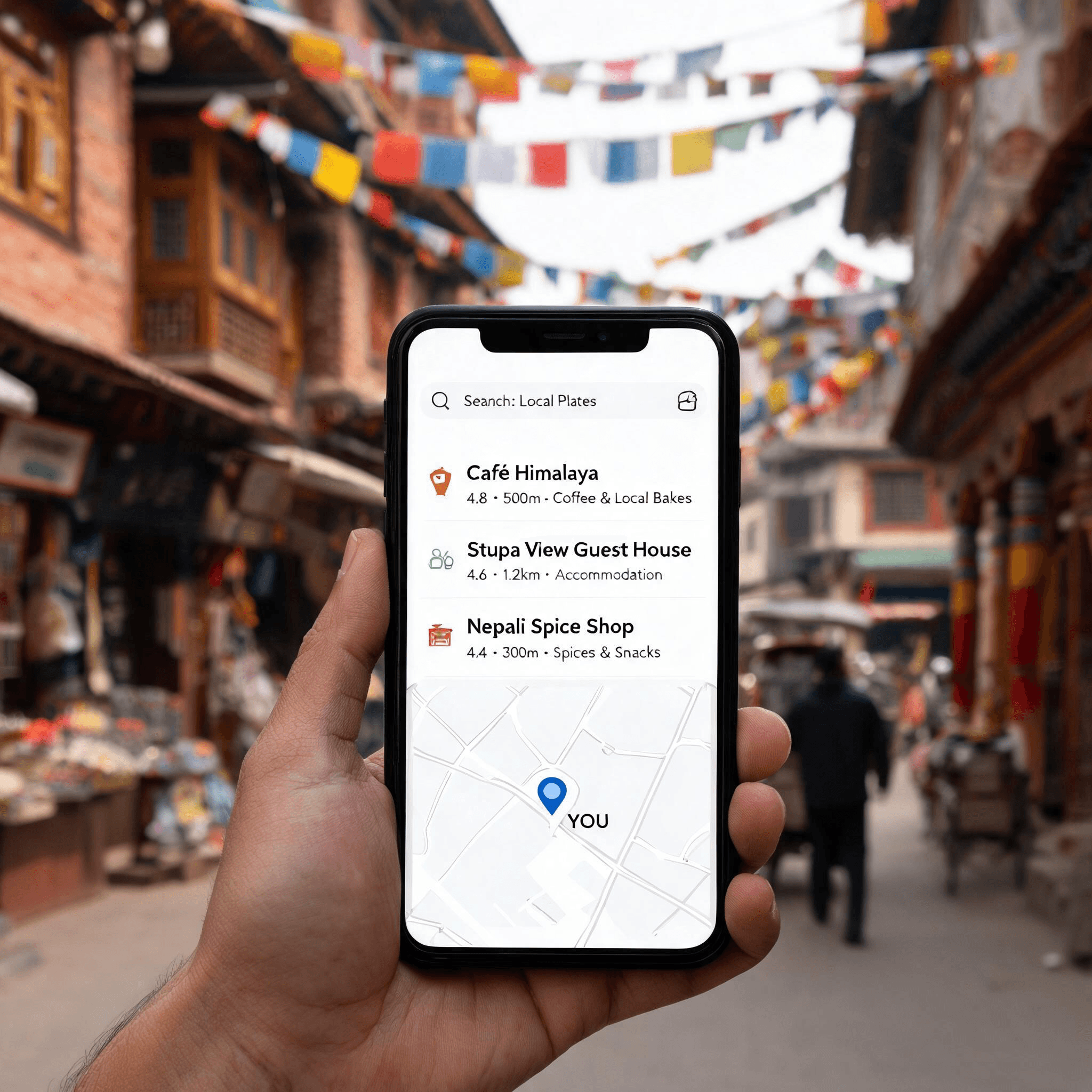
Local SEO in Nepal: How It Helps Businesses Grow Online and Offline
Before someone walks into a shop, books a hotel room, or calls a service provider in Nepal, there's a good chance they searched for it first. Someone looking for a good coffee spot in Kathmandu, a clothing store in Pokhara, or a computer training center in Itahari almost always starts the same way — with a quick Google search on their phone. That search, and whether your business shows up in it, is exactly what Local SEO is about.
Local SEO, short for local search engine optimization, is the practice of optimizing a business's online presence so it appears when nearby customers search for what it sells. For businesses operating in Nepal, getting this right isn't a nice-to-have anymore — it's often the difference between a steady stream of new customers and being invisible to people who were actively looking to buy.
This guide breaks down what local SEO actually does for a business, why it matters specifically in Nepal's market right now, and what practical steps to take to start improving it.
What Local SEO Actually Means
At its core, local SEO is about visibility tied to location. When someone searches "best coffee shop in Kathmandu," "digital marketing agency near me," or "computer training institute in Nepal," Google doesn't just show the most popular websites in the world — it prioritizes businesses that are relevant to where the searcher is standing (or where they've said they're looking). Local SEO is what determines whether your business is one of those results or whether a competitor is.
It touches several things at once: your Google Business Profile, the keywords on your website, how consistently your business information appears across the internet, and how many (and how good) your customer reviews are.
Why It's Become Urgent for Businesses in Nepal
Internet and smartphone use in Nepal has grown steadily for years, and a large share of that growth is mobile-first — people searching, comparing, and deciding, all from their phone, often while already out and about. That shift means the businesses showing up at the top of local search results are the ones getting the calls, the walk-ins, and the bookings. The ones that aren't optimized are quietly losing customers to competitors they may not even know exist.
This matters more in a market like Nepal's, where word-of-mouth used to be the dominant way people found businesses. Local search has effectively become the digital version of word-of-mouth — except it runs 24/7 and reaches far more people than a conversation ever could.
How Local SEO Actually Helps a Business
It makes you easy to find at the exact moment someone needs you. If you run a restaurant in Kathmandu and someone nearby searches "best restaurant near me," a well-optimized local presence is what gets you into that result. The easier you are to find in that moment, the more of those searches turn into actual customers.
It puts you on the map — literally. Google Maps has become one of the primary ways people locate and choose businesses. When someone searches for something nearby, Google often shows a map with a short list of top local results above the regular listings. Businesses with a properly optimized Google Business Profile are far more likely to land in that spot, which tends to bring more direction requests, more calls, and more first-time visits.
It reaches people who are already ready to buy. This is what separates local SEO from most advertising. Someone searching "hotel in Pokhara" or "SEO agency in Nepal" isn't casually browsing — they're actively looking to make a decision soon. Showing up for that search means reaching people at exactly the right moment, which is why local SEO tends to convert better than broader marketing efforts.
It builds trust before a customer even contacts you. People generally trust businesses that show up consistently on the first page of Google, and that trust builds further when the listing has accurate information, real photos, and genuine reviews. A business that looks well-maintained online tends to be assumed well-run offline too, fair or not.
It drives more people to your website. Higher visibility in local search naturally sends more visitors to your site, and each of those visits is a chance to convert someone into a lead, a booking, or a sale. A business with strong local rankings and a functional website turns search traffic into a genuine growth channel rather than just foot traffic.
It gives smaller businesses a real shot against bigger competitors. This is one of the most underrated parts of local SEO. A national chain might dominate broad search terms, but a small, well-optimized local training center in Itahari can easily outrank that same chain for searches specific to its area. Local SEO rewards relevance and consistency more than size or budget, which makes it one of the most cost-effective tools available to small and mid-sized Nepali businesses.
It naturally generates more reviews — and reviews feed the cycle. Businesses that actively manage their local presence tend to collect more reviews, and those reviews do double duty: they influence Google's ranking algorithm and they influence real customers reading them before deciding where to go.
Practical Local SEO Steps for Businesses in Nepal
Claim and fully complete your Google Business Profile. This is the single most impactful thing most businesses in Nepal haven't done properly yet. Make sure your business name, address, phone number, website, hours, and photos are accurate and complete — incomplete or inconsistent listings are one of the most common reasons businesses get outranked by less deserving competitors.
Use keywords that reflect where you actually operate. Rather than generic terms, work location into your keywords naturally — "SEO company in Nepal," "restaurant in Kathmandu," "training institute in Itahari," "travel agency in Pokhara." These phrases tell Google exactly where and who to show your business to.
Publish content relevant to your local market. A blog post about doing business in Kathmandu, tourism updates in Pokhara, or local market trends in Nepal signals relevance in a way a generic, location-free page never will.
Keep your business information consistent everywhere. Your name, address, and phone number should match exactly across directories, social media, and your website. Inconsistent listings confuse both customers and Google's ranking systems.
Make sure your site actually works well on mobile. Most local searches happen on a phone, often on a mobile connection that isn't blazing fast. A slow or clunky mobile site loses customers before they even see what you offer.
Where This Is Heading
As more of Nepal comes online and more searches shift to voice and map-based navigation, the businesses that invest in local SEO now are the ones that will still be visible five years from now. This isn't a trend that's likely to reverse — if anything, the gap between businesses that show up and businesses that don't is only going to widen.
The Bottom Line
Local SEO isn't optional anymore for businesses operating in Nepal, whether that's a restaurant, a clinic, a retail shop, or a service-based company. It's what connects you to customers at the exact moment they're searching for what you offer — and the businesses that take it seriously now will have a real, compounding advantage over the ones that wait.
Join the Discussion
Share your thoughts and engage with our community.
Loading comments...
Log in to join the discussion
Register on the platform, verify your email, then comment on this article.