
How to Start a Small Business in Nepal in 2026: A Complete Step-by-Step Guide
How to Start a Small Business in Nepal in 2026: A Complete Step-by-Step Guide
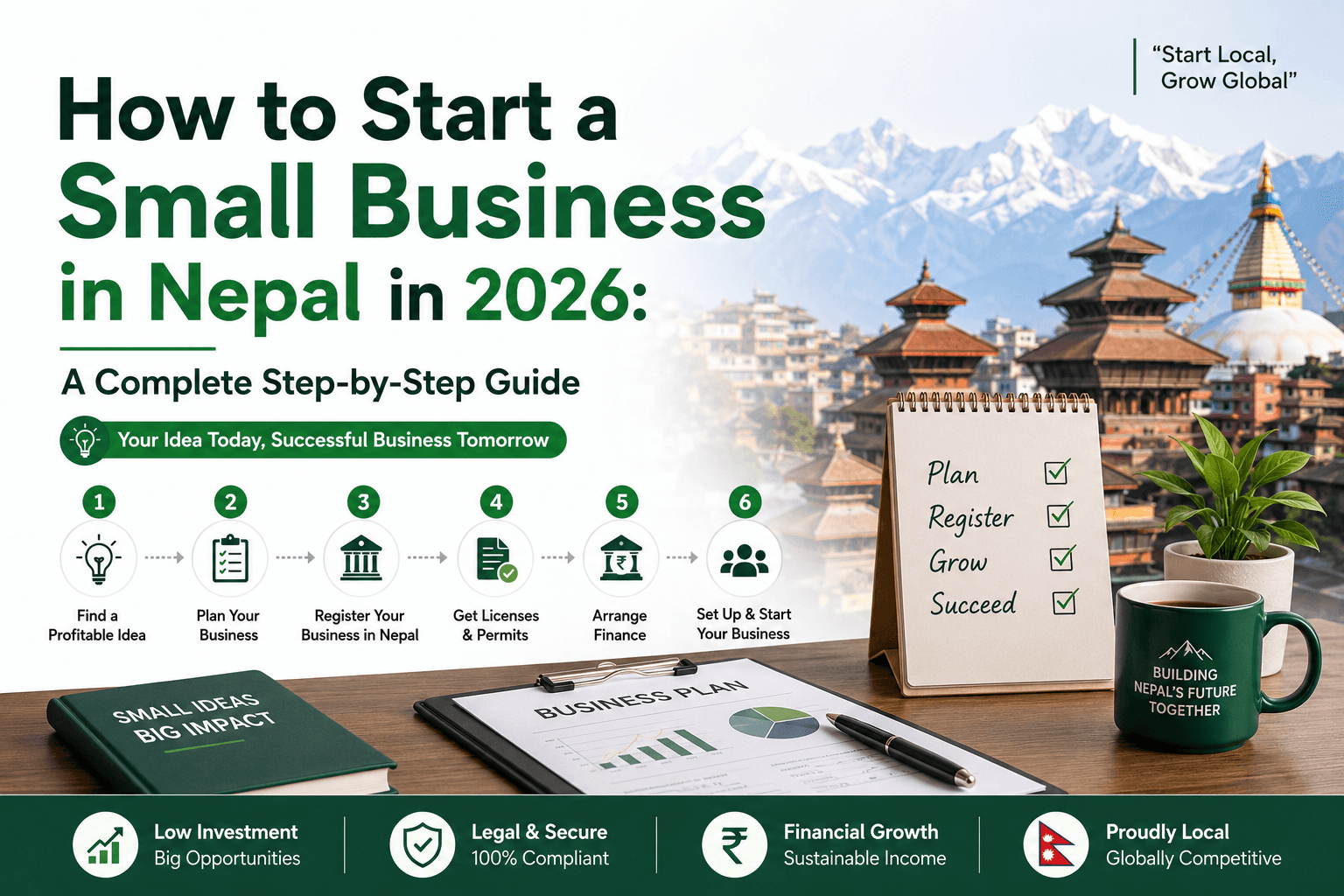
How to Start a Small Business in Nepal in 2026: A Complete Step-by-Step Guide
Starting a business in Nepal has never been more accessible. With digital registration systems, growing access to microfinance, and a young, mobile-first consumer base, 2026 is one of the best times for first-time entrepreneurs to turn an idea into a registered, income-generating business. This guide walks you through everything you need — from choosing a business structure to getting your PAN, VAT, and local operating license — in plain, practical steps.
Why Start a Small Business in Nepal Now
Nepal's economy is shifting toward services, e-commerce, tourism-linked ventures, and small-scale manufacturing. Remittance-backed household spending, improving digital payment infrastructure (eSewa, Khalti, ConnectIPS), and rising demand for local products all create real openings for small businesses — whether it's a home-based bakery in Kathmandu, a trekking gear rental shop in Pokhara, or a freelance digital agency serving overseas clients.
Step 1: Validate Your Business Idea
Before registering anything, confirm there's real demand:
- Talk to 10–20 potential customers in your target area.
- Check what competitors charge and what gaps exist in service or quality.
- Estimate your minimum viable budget — rent, inventory, tools, and a 3-month cash buffer.
A simple validation exercise saves you from registering (and paying fees for) a business that never finds customers.
Step 2: Choose the Right Business Structure
Most small businesses in Nepal register under one of these structures:
| Structure | Best For | Registered With |
|---|---|---|
| Sole Proprietorship (Firm) | Solo owners, small shops, freelancers | Office of the Company Registrar / local Ward Office |
| Partnership Firm | Two or more co-founders | Office of the Company Registrar |
| Private Limited Company | Startups planning to scale or raise investment | Office of the Company Registrar (OCR) |
A sole proprietorship is the fastest and cheapest option for most first-time entrepreneurs, while a private limited company offers liability protection and is better suited if you plan to bring in investors later.
Step 3: Register Your Business Name and Entity
- Reserve your company/firm name online through the Office of the Company Registrar (OCR) portal.
- Submit required documents: citizenship certificate, passport-size photos, and Memorandum/Articles of Association (for companies).
- Pay the registration fee based on your authorized capital.
- Receive your Certificate of Incorporation or Firm Registration Certificate.
Processing typically takes a few working days if documents are complete and correct.
Step 4: Get Your PAN and VAT Registration
Every registered business needs a Permanent Account Number (PAN) from the Inland Revenue Department (IRD) to operate legally and pay taxes. If your annual turnover is expected to cross the VAT threshold, or you plan to sell taxable goods/services, you'll also need VAT registration.
- PAN registration can be done at your local IRD office or through the IRD's online portal.
- VAT registration is mandatory for certain business categories regardless of turnover (check current IRD thresholds, as they're revised periodically).
Step 5: Obtain Local Licenses and Municipality Approval
Depending on your business type, you may need:
- A local operating license from your Ward Office or Municipality.
- Sector-specific approvals (food hygiene certificate for restaurants, tourism license for trekking/travel businesses, industry registration for manufacturing).
- Fire safety and building clearance for physical premises.
Step 6: Open a Business Bank Account
With your registration certificate and PAN in hand, open a current (business) bank account. This keeps personal and business finances separate — essential for clean bookkeeping, tax filing, and building a credit history if you need a loan later.
Step 7: Plan Your Funding
Common funding sources for small businesses in Nepal include:
- Personal savings and family support — the most common starting point.
- Microfinance institutions and cooperatives — accessible for small working-capital loans.
- Commercial bank SME loans — require collateral or a solid business plan.
- Government and NGO startup schemes — periodically available for youth entrepreneurship and women-led businesses.
Use an EMI calculator to model loan repayments before committing to any financing option.
Step 8: Set Up Digital Payments and Basic Accounting
Nepali customers increasingly expect digital payment options. At minimum, set up:
- A business account with eSewa or Khalti for QR and mobile payments.
- Basic bookkeeping — even a simple spreadsheet — to track income, expenses, and tax obligations from day one.
- A system for issuing bills/invoices, which is legally required once VAT-registered.
Step 9: Market Your Business Locally and Online
- Create a Google Business Profile so local customers can find you.
- Use Facebook and Instagram, still the most widely used platforms for small business marketing in Nepal.
- Consider basic local SEO so your business shows up when people search for your services in your city.
Common Mistakes First-Time Entrepreneurs Make
- Skipping PAN/VAT registration and facing penalties later.
- Mixing personal and business finances.
- Underestimating working capital needs for the first 3–6 months.
- Not budgeting for renewal fees and annual compliance filings.
Final Thoughts
Starting a small business in Nepal in 2026 comes down to a clear sequence: validate your idea, choose the right structure, complete registration and tax formalities, secure funding, and build a simple but consistent system for finance and marketing. None of these steps are complicated on their own — the key is doing them in order and not skipping the paperwork that protects you later.
For more tools to help you plan and manage your business finances, explore our free business tools for Nepal, including the Nepal Income Tax Calculator and SIP Calculator.
Frequently Asked Questions
How much does it cost to register a small business in Nepal? Costs vary by structure and authorized capital, but sole proprietorship registration is generally the most affordable option, with fees paid at the Office of the Company Registrar or local Ward Office.
Do I need VAT registration for a small home-based business? Not always — it depends on your business category and expected turnover. Check current thresholds with the Inland Revenue Department before you start selling.
Can foreigners start a business in Nepal? Yes, though foreign investment is subject to additional approvals through the Department of Industry and sector-specific restrictions. Local sole proprietorships are generally reserved for Nepali citizens.
How long does business registration take in Nepal? With complete documentation, registration can often be completed within a few working days, though sector-specific licenses may take longer.
Join the Discussion
Share your thoughts and engage with our community.
Loading comments...
Log in to join the discussion
Register on the platform, verify your email, then comment on this article.